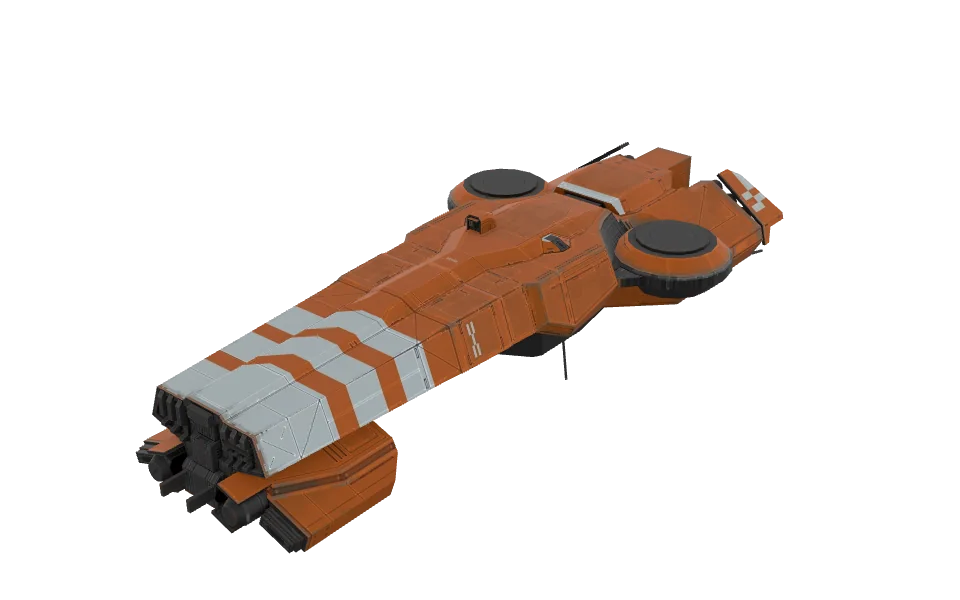
Starter Seraph that pays for itself
Seraph · Standard quality · miner, solo · by slagwright, 2 Oct 2026
- Battery hardpoint (turrets and missile launchers)
- Subsystem hardpoint (active modules such as ECM and repairers)
- Propulsion hardpoint (drive modules)
- Core slot (passive modules and conduits, any cell)
Build rating
3,920
- A
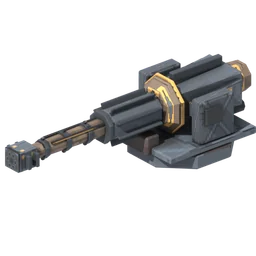 Vanguard LanceBR 216
 - B
 Rampart GatlingBR 212
 - CRampart GatlingBR 212
- D
 Armor RepairerBR 318
 - E
 Lightframe ThrustersBR 198
 - F
 Boost ManifoldBR 174
 - G
 Armor PlatesBR 200
 - H
 Turret ConduitBR 190
Notes
The free Seraph at Faction quality, so nothing on it is precious. One Dronelink on a battery hardpoint and a few mining drones in cargo, plus one turret so NPCs don't get a free lunch.
Carry a little Veskar and Pirite: damaged drones repair in cargo using them.
Short runs only. Mine, extract, recycle, repeat. If you lose it, you get another one, but it costs Merits.
Ship stats
Base is the bare Seraph at Standard quality.
Rating
- Hull (Standard)
- 2,200
- Modules
- 1,720
- Cargo (25% of what's in the hold)
- 0
- Build rating
- 3,920
Defense
| Stat | Base | Now | Change |
|---|---|---|---|
| Effective health | 2,900 HP | 3,245 HP | ▲ +345 (better) |
| Armor | 1,750 HP | 2,012 HP | ▲ +262 (better) |
| Hull | 400 HP | 400 HP | 0 |
| Kinetic resist | 24% | 24% | 0 |
| Explosive resist | 20% | 20% | 0 |
| Acid resist | 40% | 40% | 0 |
Reactor
| Stat | Base | Now | Change |
|---|---|---|---|
| Heat capacity | 450 GJ | 443.6 GJ | ▼ −6.4 (worse) |
| Heat dissipation | 4.5 /s | 4.5 /s | 0 |
| Module heat (listed) | 0 /s | 8.6 /s | ▲ +8.6 (worse) |
| 1 fitted active module has no heat figure on the wiki and counts as 0. | |||
Agility
| Stat | Base | Now | Change |
|---|---|---|---|
| Mass | 3.9 t | 3.89 t | ▼ −0.01 (better) |
| Thrust | 140 N | 151.2 N | ▲ +11.2 (better) |
| Acceleration | 85.9 m/s² | 93.1 m/s² | ▲ +7.2 (better) |
| Turn rate | 29.8 °/s | 29.9 °/s | ▲ +0.1 (better) |
| Turn acceleration | 71.4 °/s² | – | – |
| Changes with mass, not yet calculated. | |||
| Max velocity | 321 m/s | 353.3 m/s | ▲ +32.3 (better) |
Targeting
| Stat | Base | Now | Change |
|---|---|---|---|
| Sensor range | 4 km | 4 km | 0 |
| Signature radius | 3 km | 3 km | 0 |
Cargo
| Stat | Base | Now | Change |
|---|---|---|---|
| Cargo slots | 24 | 24 | 0 |
| Safety hold slots | 4 | 4 | 0 |
Fitting
- Battery hardpoints covered
- 3 of 4
- Battery modules
- 3 of 4
- Subsystem hardpoints covered
- 2 of 2
- Propulsion hardpoints covered
- 2 of 4
- Core slots used
- 9 of 17
- Ports connected
- not modelled
- Not modelled yet: the wiki doesn't list ports per module.
- Conduits
- 1
- Each at 50% output: with no ports modelled, nothing connects to them.
- Regalia set links
- not modelled
- Not modelled yet: the editor has no Regalia pieces.
Source: Citadel Wiki, Seraph and Modules, fetched 3 Oct 2026. 12 base stats: Community ship guide by sturmer.one (kekbur.net), Beta Patch 2. Kinetic resist, explosive resist and safety hold slots: official patch notes, Beta Patch 2. Modules counted at Standard quality.
Show the text
How the stats are worked out
Only what the sources document. Base values at Standard quality come from the community ship guide by sturmer.one (Beta Patch 2, read from the game: rating, armor, hull, heat, mass, thrust, handling, speed, sensor range, signature and hardpoints) and the hull's wiki page (effective health, resists, cargo, the fitting grid). Beta Patch 2 gave every hull four safety hold cells and armor resists of 24% kinetic and 20% high-explosive (official patch notes).
Calculated
- Hull quality: Faction 85%, Flawed 90%, Superior 110%, Masterwork 120% of armor, hull, heat capacity and the hull's rating. Nothing else changes with quality (Rarity and quality page).
- Passive module effects (core modules, conduits, propulsion modules) on armor, hull, heat capacity, heat dissipation, mass, thrust, turn rate, max velocity, sensor range, signature and cargo, as the Modules page lists them.
- Stacking: percentage bonuses to one stat count strongest first at 100%, 95.8%, 84.1%, 67.7%, 50% and so on; bonuses and penalties apart; flat bonuses in full (Ship fitting page).
- Acceleration = thrust ÷ mass and turn rate = turning force ÷ mass (Ship stats page), scaled from the hull's own figures. Max velocity doesn't depend on mass. With the guide's values one constant fits 18 hulls; the two scouts (130 N in the guide, 138 N on the wiki) fit only among themselves, which scaling from their own figures allows.
- Effective health = armor ÷ (1 − kinetic resist) + hull ÷ the hull's share of kinetic damage, solved from each hull's own figures (0.67 on all 20). The hull term is solved with the wiki's own resist, armor and hull; the armor term uses the Beta Patch 2 resist and the current armor.
- Conduits at 50% output: with no ports, nothing connects to them (Ports and conduits page).
- Build rating: hull at its quality + modules at Standard + 25% of the cargo hold's rating (Build rating page).
- Module heat: the heat per second the wiki lists for fitted active modules, added up.
Not modelled yet
- Resist bonuses (and effective health once one is fitted): the wiki doesn't say how a resist bonus adds to the hull's resist.
- Turn acceleration after mass or turn rate changes: no formula on the wiki.
- Active modules (subsystems, turrets): their effects apply only while running and aren't on the sheet.
- Ports, port connections, Tek Ciphers, Regalia set links, rolled modifiers, module quality, affinity, time to SCRAM and module weights.
- Rounding: the sources show mass to 0.1 t, so derived figures can be off in the last digit.
- The Orstrog and Vektr grids are the wiki's (4 battery, 3 subsystem, 3 propulsion, 20 core); the guide counts 5, 2, 2 and 21. The editor uses the wiki grid until the current layout is known.
Comments
No tips yet.
Sign in to add a tip or vote.
Sample build on the real Seraph grid and real modules (Citadel Wiki), laid out by auto-fit.