Answers
Access & platform
Where and how do I play?
In a desktop web browser, no install.
- Use Chrome or Edge; some players find Edge smoother.
- Mobile technically loads but is not supported.
- A downloadable client is planned.
- Beta access is given out in waves announced on X and in Discord.
- The server is in the US. The first load can take a while depending on your device, connection and distance to it.
Warning
Keep the game tab in front. Since Beta Patch 2, a tab left in the background for more than a minute disconnects.
Which browser should I use?
Chrome or Edge.
- Some players found Edge smoother than Chrome.
- If you avoid Chrome, the devs suggest Vivaldi over Firefox.
- Play on a desktop: mobile loads but is not supported.
If FPS is low on a strong PC, the browser may be using the integrated GPU:
- Set the browser to High performance in Windows Settings > System > Display > Graphics.
- Restart the browser.
Will progress be wiped after the beta?
Yes, there are wipes between test phases.
How do I change my name? I'm stuck as RECRUIT.
You pick a callsign after the tutorial.
Getting stuck as RECRUIT was a bug, fixed in Beta Patch 1.
Death & risk
Where is it safe? Can I avoid PvP?
Hubs are safe, including Greylock (a contested hub with both factions present). No breach is fully safe.
- Hubs allow no fighting unless both pilots accept a duel, and duels are to the death.
- A faction hub admits only its own faction. Greylock is open to both.
- Each faction has lower-tier breaches the enemy faction cannot enter. Even there, allies can still shoot you; it just costs them Merits.
- Breaches hold other players as well as NPCs.
- The Gallows and Cloud Wake are unrestricted war zones (no build-rating limit).
- Other dungeon maps require a build rating within their range to enter. Cargo counts toward it at 25%.
Tip
For your first runs, stay in your faction's lower-tier breaches.
Getting started
How do I extract? It keeps sending me back in.
Use the extraction markers (green boxes) and trains. Leaving a breach is only possible by train.
- Find an extraction marker: a green box.
- Check where its train goes before boarding: destinations differ, and some lead into other breach regions.
- To get home, take the marker for your hub, for example ZHAT for Zhat Kali.
- Check your build rating: a train into a breach region refuses ships above that tier's maximum, with cargo counting at 25%. Over? Take a different train.
- Fly to the marker and harpoon onto the train.
Warning
If your harpoon disconnects in the tunnel, you're left behind and must fly back to reconnect. If the next train arrives while you're still in there, it runs you over.
Tip
Nothing you carry counts until you have extracted. Extracting from a tier is also what clears it and opens the next one.
Any advice for a first few runs?
Build up your fit, don't pull too many NPCs at once, and don't stay long.
- Start in your faction's lower-tier breaches, which the enemy faction cannot enter.
- Before undocking, put your most valuable cargo fully on the safety hold: the 2×2 square of four cells at the top left of every ship's cargo grid. Items there are kept if you die.
- Scout around before attacking anything.
- Kill a few NPCs, loot, extract, refit, repeat.
- Back in the hub, recycle common drops for ORE: it repairs your ship and identifies modules.
Tip
Build a few spare ships before taking big risks.
Where is the better loot?
In the higher-tier breaches you unlock from Greylock (the central hub).
- The deeper the tier, the better the loot: modules roll more ports and higher modifier tiers, and rarer rarities turn up more often. Stratum 0, the tutorial tier, cannot drop Regalia.
- Beta Patch 1 improved Prototype odds in tiers 3 to 7.
- Dark Triton, a rare recipe mineral, is found in the breaches off Greylock.
- To open a deeper tier, extract from the one before it.
- From Stratum 3 up, tiers also have a minimum build rating: 6,000 for Stratum 3, 8,000 for Stratum 4, up to 16,000 for Deep Strata. A bare Standard Seraph rates 2,200, so plan a bigger build.
Tip
Look for breaches with the extra-blueprint modifier.
What does Relocate do?
It moves you, not your ship, to another hub where you already have a ship docked.
Your materials stay behind. Moving them between hubs is manual: haul them, ideally with a hauler.
- Every hull starts with 24 cargo cells. Haulers have 24 to 27 core slots (the Seraph has 17), and each Cargo Bay, a core module, adds 16 cells.
- Cargo counts toward build rating at 25%, and a train into a breach region won't take a ship above that tier's maximum.
- Anything outside the safety hold is lost if the hauler dies.
- A faction hub admits only its own faction; Greylock is open to both.
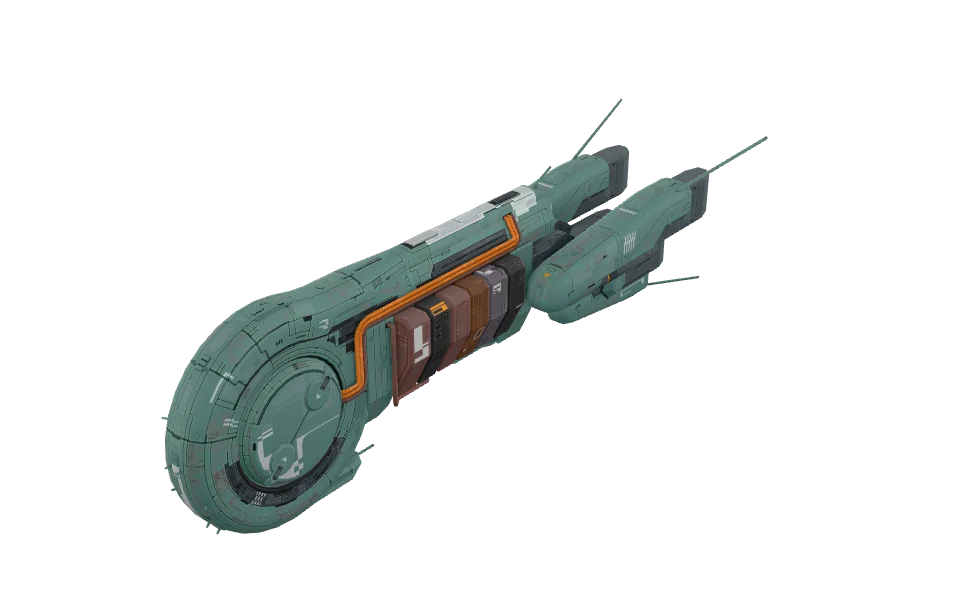 Achamoth
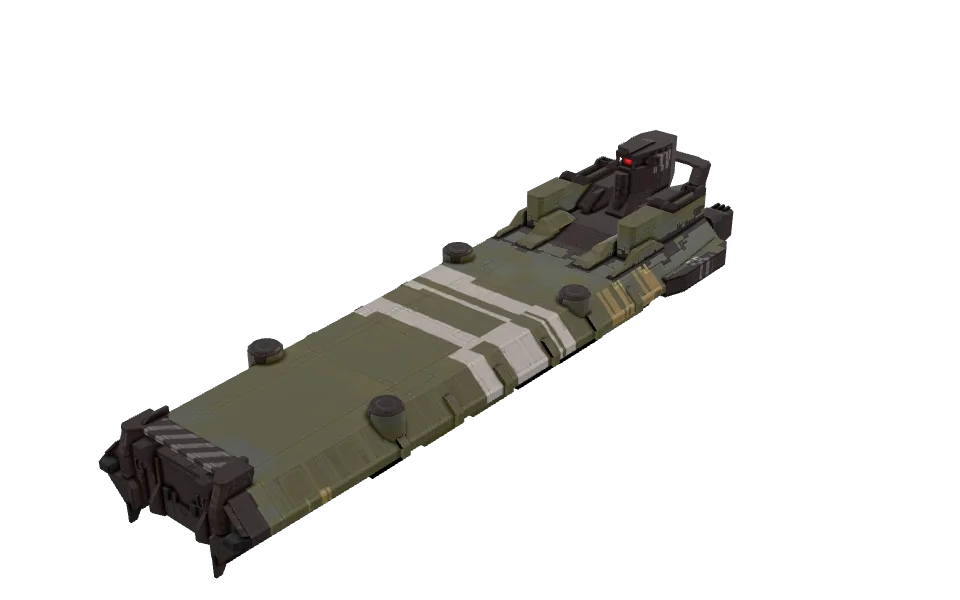 Mammon
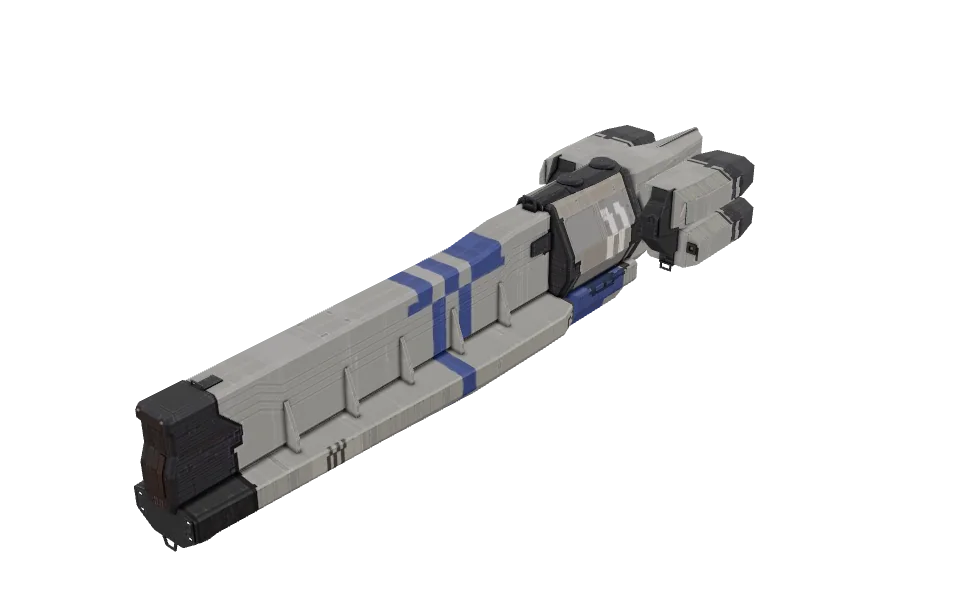 Augr
Augr Cargo Bay
Merits & faction war
How do I earn Merits?
Earn Merits through faction-war kills, Recycler deposits and relic fragments.
- Kill rival faction NPCs and players in the faction-war maps, Cloud Wake and The Gallows. Kills in other breaches don't count.
- In those maps, tow relic fragments to the salvage bays with your harpoon.
- In a hub, deposit resources in the Recycler tab of your stash (it is the faction depot). Minerals and looted gear count; faction-issued gear is worth 0.
Good to know
The Leaderboard page lists the rules.
Warning
The war maps have no build-rating limit, so you can meet anything there. Shooting an ally or losing your faction starter ship costs Merits.
I recycled loot and got 0 Merits.
Faction-issued gear is worth 0 in the Recycler.
- Minerals and looted gear do give Merits.
- Faction-issued gear returns no ORE either.
- A merit bug on 1 October also caused zero Merits; the devs restored them.
Tip
Before recycling minerals, keep rare ones such as Dark Triton and Solstine for recipes.
What do I spend Merits on?
Spend them at your faction's Quartermaster, in your faction hub.
It sells ship and module blueprints, repair charges, hulls and more. Blueprint prices seen so far:
- Seraph, Jackal and Rune: 800 Merits, 5 uses.
- Enforcer, Orstrog and Vektr: 1.3K Merits, 3 uses.
- Mining Drone: 160 Merits, 20 uses.
Good to know
Quartermaster blueprints are Faction quality, T1 only and can't be traded. Buying higher blueprints raises your rank: an Enforcer, Orstrog or Vektr blueprint makes you Sergeant.
What happens if I shoot an ally?
You lose some Merits.
- Rampart Gatlings used to auto-target allies who damaged you; Beta Patch 1 stopped that.
- The Rampart Gatling is a battery module that fires on its own: at missiles aimed at your hull, then at drones and hostiles that come close.
- Losing your faction starter ship also costs Merits.
What are the merit ranks and what do they unlock?
Nine titles, from Slug to Imperator; higher titles let more faction NPCs follow your pings.
Your title rises with the Merits you hold. At certain ranks, faction NPCs follow your pings (hold left click for the ping wheel).
Title Min. merits NPC capacity Authority (of 8) Slug 0 0 0 Recruit 10,000 1 1 Legionary 25,000 1 2 Sergeant 50,000 2 3 Knight 100,000 2 4 Commander 200,000 3 5 Praetor 400,000 4 6 Exarch 800,000 5 7 Imperator 2,000,000 All 8 To climb:
- Earn Merits with kills in Cloud Wake and The Gallows, Recycler deposits and relic fragments.
- Buying higher Quartermaster blueprints also raises your rank: an Enforcer, Orstrog or Vektr blueprint (1.3K Merits) makes you Sergeant.
- Shooting allies and losing your faction starter ship cost Merits.
Good to know
Titles reset with seasons and wipes.
Fitting
What do the slot shapes mean?
Diamond = battery hardpoint, triangle = subsystem, circle = propulsion.
- Diamond: turrets, missile and torpedo launchers, dronelinks, mining lasers and repair projectors, e.g.
 Auto-Cannon,
  Mining Laser,
  Repair Projector. You can't fit more battery modules than the hull has battery hardpoints, so a mining laser or launcher takes a turret's place.
 - Triangle: ECM and other modules you switch on yourself, e.g.
 Thrust Scrambler,
  Tracking Disruptor,
  Defense Shredder,
  Armor Hardener,
  Target Painter.
 - Circle: propulsion modules, e.g.
 Impulse Nacelle.
 - Core slots have no symbol and take any module that doesn't need a hardpoint, plus conduits. Core modules can also sit on hardpoints.
- Shaped modules only need to cover one matching hardpoint; the rest can lie on any free cells.
Tip
Press R while dragging a module to rotate it.
Changed in Beta Patch 2: missiles and torpedoes used to go on subsystem hardpoints (triangle).
- Diamond: turrets, missile and torpedo launchers, dronelinks, mining lasers and repair projectors, e.g.
How do conduits work?
1x1 items that get stronger the more same-type modules connect to them through ports.
You'll need
- Place the conduit on a free cell. It's a core item, so it needs no hardpoint.
- Fit modules of the conduit's type with a port pointing at its cell. Each one counts as a connection.
- Check the conduit's tooltip: it shows the connections and the effectiveness.
Good to know
- Strength: 50% with nothing connected. Figures differ on the top end: 200% with four connections, or +50% per connection, so 250% with four.
- They follow affinity type like modules do.
- A conduit does not let you place a weapon where it otherwise couldn't go.
Tip
Ports turn with the module, so rotate it (R) to aim a port at the conduit.
Is there a power/CPU limit?
No.
Fits are limited by grid space, hardpoints, heat and the breach's build-rating range:
- Grid space: every cell under a module must be part of the grid and free.
- Hardpoints: no more battery modules than battery hardpoints, and at most six turrets of one family.
- Heat: modules and thrusters generate heat you must manage. If heat reaches the top, the reactor SCRAMs: a control rod burns and the ship shuts down for 3 seconds.
- Build rating: your ship's rating, cargo included, must be within the breach tier's limits, e.g. 6,000 at most for Stratum 1.
Tip
The fitting screen's Time to SCRAM shows how long you last with every active module running. It leaves out engine heat, so in flight it's shorter.
Is max heat capacity good?
Depends on the build.
- It is great for drone, ECM and shield builds.
- Certain barriers vent heat if you time the activation perfectly, like a parry.
- Hulls range from 425 to 577.5 GJ. When heat reaches the top, the reactor SCRAMs: a control rod burns and the ship shuts down for 3 seconds.
- Many modules work better while heat sits in the Optimal zone (30% to 70% of max heat), e.g. repairers' cycle time is 25% shorter.
Modules that add it:
 Coolant Reservoir (+15%),
  Control Relay (+17%, plus drone speed),
  Adaptive Ward (+8%, plus barrier HP and regen).
Tip
The Shield affinity perk Thermal Flow makes barriers vent ship heat when they absorb damage.
Why did my build rating go over the breach limit?
Cargo counts toward build rating at a reduced rate (25%).
A train that leads to a breach region won't take a ship rated above that tier's maximum, so a full hold can put you over on the way out.
- Use a different extraction train.
- Before the next run, plan for the haul. To bring the rating down, empty the hold, swap in lower-quality modules or keep affinity points unspent.
Good to know
The fitting screen shows the number as Ship Build Rating.
Tip
Entering a breach uses the same rule, cargo included. Stratum 1 tops out at 6,000 and Stratum 2 at 8,000.
What does a Thoth adapter do?
It changes a module's type, for example from armor to turret.
The type is shown in the module's tooltip, next to its rarity and quality. Changing it changes:
- which conduits connect to the module;
- which modifiers it rolls.
It doesn't change which slot the module fits in, and it doesn't turn it into a different module.
Good to know
- Players report it only works on Advanced (blue) modules.
- A module of the wrong type for a cipher key can be changed with a Thoth adapter first, then keyed.
 Turret Conduit
 Shield Conduit
 Drone Conduit
Combat
Is aiming manual?
Mostly not: lock a target and turrets track on their own.
- Your job is piloting to keep them on target.
- Tab locks a target. Ones near your cursor come first; otherwise enemy players, then NPC ships, mines and boss mounts, then attack drones. Tab again within 0.5 s cycles; Tab on your locked target unlocks it.
- You can only lock a contact inside your sensor range with a clear line of sight. Beyond that (up to 10 km) it shows as a blip you can't target.
- Some weapons are aimed manually. Missile launchers aim at your cursor. Matching torpedo launchers share one hotkey; with no turrets fitted, Tab fires your largest group of matching launchers.
- The Vanguard Lance fires only along your ship's heading, so turn into your target.
- Shots can miss: you'll see 'miss' in the damage log. Turrets track based on the target's signature radius.
How do I survive missiles and torpedoes?
Keep your distance and high transversal (move across their path).
- Before the run, fit point defence. The
 Rampart Gatling shoots down missiles aimed at your hull on its own; the
  Flak Cannon's Shockburst destroys nearby enemy missiles.
 - Lean on shields: they resist 30% of high-explosive damage, armor only 20%.
- In the fight, keep your distance and move across the missiles' path. Missiles coast for 0.8 s after launch before they accelerate.
- A
 Signal Jammer briefly disables nearby enemies' missile homing. A squadmate's Remote Tracking Shroud does the same for missiles aimed at you.
Good to know
- Torpedo reload was slowed in Beta Patch 1, from 1.5s to 2s.
- Signature radius doesn't affect missiles. Missiles can't track a cloaked ship.
Changed in Beta Patch 2: Cruise Missile damage fell from 200 to 180, Torpedo from 250 to 225, and homing bonuses shrank.
- Before the run, fit point defence. The
How does the Vanguard Lance work?
It only fires at targets directly in front of the ship, so turn into your target.
You'll need
- Every fitted lance fires. Lances form one battery and fire together; you can fit up to six.
- Battery ability, Penetrator Round: it charges, then each lance's next shot gets longer reach and passes through its target into every ship behind it in line, allies included. Fire before the window expires.
- Lances fire 25% faster while your reactor is in the Optimal heat zone (30% to 70% of max heat).
Warning
Shooting an ally costs Merits, so check what's behind your target before a penetrator shot.
How do I lock a target?
Press Tab or right-click a target; your weapons fire once it's in range.
- Tab picks targets near your cursor first. After that it goes enemy players, then NPC ships, mines and boss mounts, then attack drones.
- Press Tab again within 0.5 s to cycle to the next target.
- Press Tab on your locked target to unlock it.
Good to know
The pilot you're locking can see that you're locking them.
What's the difference between a signal jammer and a tracking disruptor?
The jammer covers turrets and missile locks but only protects you; the disruptor covers turrets only but can help allies.
- Signal Jammer: disrupts both turrets and missile locks, but only on ships that are targeting you.
- Tracking Disruptor: affects turrets only, reloads much faster, and can be used to protect allies.
Which ECM modules work on NPCs?
Tracking disruptors, defense shredders and thrust scramblers work on NPCs; heat projectors don't.
- Work on NPCs: Tracking Disruptor, Defense Shredder, Thrust Scrambler.
- No effect: heat projectors, because NPCs have no heat.
Good to know
Since Beta Patch 2 a thrust scrambler shuts off an NPC's boost, and a Torque Snare shuts off its drift.
 Vanguard Lance
Ships & affinity
Why are some modifiers crossed out?
You need affinity points in the type matching the module (turret, shield, utility...).
- Fly that ship: it earns affinity XP from kills, mining, harpooning loot containers and repairing others.
- Each level gives one point (max level 20). Spend it in the matching type.
- The perks list shows which level unlocks more modifiers.
Warning
How points are split isn't settled. Either a hull binds one of eight affinities permanently and spends all its points within it, or points go into several types. Check before you bind.
Good to know
- Modifiers apply top-down, so an artifact's downsides apply first.
- Spent points can't be taken back, except by copying the ship with a Yata replicator.
- Hold Z on an item's tooltip to see each modifier's roll range next to its value.
Items, ore & cargo
Why can't I equip this module?
It's probably unidentified (the tooltip says so).
You'll need
- Read the module's tooltip. Anything above Normal rarity can drop unidentified: its modifiers, ports and rating are hidden and it can't be fitted.
- Identify it by right-clicking with enough ORE in your stash; the tooltip shows the cost. It costs 10% of the item's rating, at least 1 ORE.
- Fit it while tethered to a refit terminal. In a hub your ship tethers to the pad automatically.
Still won't fit? A battery, subsystem or propulsion module must cover a matching hardpoint, and a hull can't carry more battery modules than it has battery hardpoints.
How do I get ORE?
Recycle modules and minerals in the Recycler tab of your stash at any hub.
You'll need
- Get your loot home: the only way out of a breach is a train.
- At any hub, open your stash and go to the Recycler tab.
- Recycle modules and minerals. You get ORE equal to 25% of the item's rating.
Good to know
- Faction-issued gear gives nothing, in ORE or in Merits.
- The Recycler is also your faction's depot, so minerals and looted gear earn Merits too.
- Early on it's worth recycling common drops since ORE repairs your ship and identifies modules. It also pays for blueprint research.
- Keep rare minerals such as Dark Triton and Solstine for recipes.
How do I repair outside my home hub?
Carry ORE in cargo and repair at a terminal.
- Load ORE into cargo before you leave. A breach terminal takes ORE from cargo; only a hub pad uses your stash.
- Tether to a refit terminal with the harpoon and wait out the 8-second hack; once authorised, tethering again skips it.
- Repair: 5 ORE per 100 armor, 10 per 100 hull and 10 per burned control rod.
Good to know
- You can be attacked while tethered.
- Repair charges come from the Quartermaster; armor repairers reload automatically from charges in cargo once their loaded charges run out.
- A Standard Nanite Regenerator repairs 70 HP/s for 16 s, more with higher quality and armor-repair bonuses.
Changed in Beta Patch 2: nanite repair used to be a flat amount.
How do drones work?
Equip a Dronelink, keep drones in cargo, press Q.
You'll need
- Fit the Dronelink while tethered to a refit terminal.
- Keep drones in cargo.
- Press Q while hovering a target or mineral fragment.
Good to know
- Dronelink bandwidth caps how many drones are out; cargo space caps how many you carry. A Drone Conduit or Swarm Protocol adds 2 bandwidth.
- Drone endurance sets how much heat your ship makes while drones are out, not flight time.
- Damaged drones repair in cargo using Veskar/Pirite.
- Utility mining-speed bonuses apply to drones too.
- Drones deal kinetic damage.
- NPC ships currently don't target drones, so they shine in PvE.
- The Quartermaster sells the Mining Drone blueprint: 160 Merits, 20 uses.
Warning
Drones are easy to counter in PvP. Rampart Gatlings intercept attack drones and flak shreds them.
 ORE
ORE Mining Drone
 Armor Repairer
 repair charges
 Nanite Regenerator
Crafting & blueprints
Where do blueprints come from?
Loot, your faction Quartermaster, and a merchant in Greylock.
- Loot: breaches and random mobs. Look for the extra-blueprint breach modifier.
- Your faction Quartermaster, for Merits. Its blueprints are Faction quality, T1 only and can't be traded. It's in your faction hub, Zhat Kali for Tzhal or Ganden for Ganden; since Beta Patch 1 vendors have yellow HUD markers.
- The blueprint/industry merchant in Greylock.
Quartermaster prices seen so far:
What does researching a blueprint do?
Spending ORE to research a blueprint raises its tier, from T1 up to T5.
You'll need
- Get ORE by recycling modules and minerals in the Recycler tab of your stash, at any hub.
- In the Forge, right-click the blueprint to research it.
- 'T2-T4' in the queue means research, not a craft.
What a higher tier gives you:
- Better odds of high quality. From T4 you can't roll Flawed.
- For modules, more ports.
- No rise in material costs (rarer blueprints do cost more).
Tip
Quartermaster blueprints start at T1, so research one before you build in bulk.
What do the consumables do?
They change items after crafting: modifiers, quality, subsystems, rarity, ports and type.
- Hermes augmenter, Norn overclocker and Laplace matrix add modifiers (max 4) to modules or hulls in the stash grid.
- Probability matrix adds 4 modifiers to a Normal item.
- Kairo removes a modifier, possibly dropping rarity (3 to 2 modifiers).
- Ptah crucible rerolls quality, whole ships included.
- Skuld omen rerolls subsystems.
- Tyche's catalyst: 25% chance of turning an item into its artifact (possibly regalia) variant; failure destroys it.
- Janus adds one port to a portless module; a developer didn't think one with ports can get more. Researched blueprints add ports at higher tiers.
- Thoth adapters change a module's type.
- Yata replicator copies a ship at the same level, affinity points unspent.
Good to know
- Forge cells take the same consumables for industry modifiers.
- Breaches with the "more consumables" modifier drop more, like Norn overclockers.
Tip
Order of use matters.
Can ships be artifacts?
Yes: craft one from an artifact ship blueprint, or gamble a normal ship with Tyche's catalyst.
You'll need
- Artifact ship blueprints drop. A crafted item keeps its blueprint's rarity. An Artifact blueprint needs 50% more materials than a Normal one.
- Tyche's catalyst works on normal ships: a 25% chance to make the artifact variant; it destroys the item if it fails.
- Each hull has an artifact version. Developers say they have a special modifier, some with unique abilities; Beta Patch 1 teased 13. Tek Resonance is a Rune artifact stat. Documented so far: Praedo (Condor), Dvergr (Augr), Solvarg (Skoll) and Tempestas (Typhon).
- Modifiers apply top-down, so an artifact's downsides apply first.
Tip
Only use a catalyst on a hull you can afford to lose.
 Tyche's catalyst